

Table of Contents
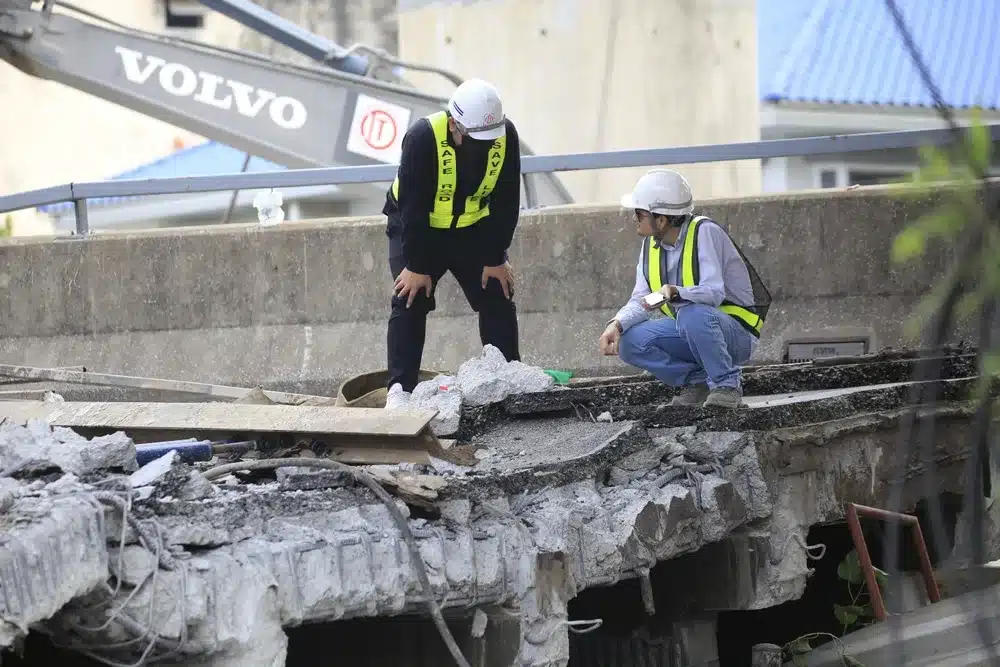
A month before the earthquake that struck Cebu and the Visayas on September 30, business leaders had already called for a unified energy plan. The 6.9-magnitude quake, the region’s strongest on record, has now heightened concerns that high power costs and unstable supply could threaten Cebu’s strong economic momentum.
According to Melanie Ng, vice president for Visayas at the Philippine Chamber of Commerce and Industry, reliable and affordable power remains vital for attracting and sustaining new businesses, as emphasized during the Kapihan 2025 forum on unlocking Cebu’s economic potential.
Lapu-Lapu City tourism head Garry Lao also stressed that consistent access to power and water is essential for the hospitality sector, noting that resorts and hotels rely on an uninterrupted supply to operate efficiently. “Without reliable energy, tourism cannot realize its full potential,” he added as the city readies to host the ASEAN 2026 events.
(Also read: Quake-Shaken Cebu Pushes for Energy Justice & Recovery)
Energy stability under threat
Following the quake’s disruption to the power grid, the National Grid Corporation of the Philippines (NGCP) placed the Visayas on Yellow Alert on October 11 after multiple plants went offline and reserves ran low. Although the alert was lifted that evening, the Cebu Electricity Rights Advocates (CERA) cautioned that the incident revealed lingering weaknesses in the national grid’s ability to cope with disasters and supply gaps.
Energy experts warned that recurring Yellow Alerts expose the Visayas grid’s thin reserves and heavy reliance on imported power. Such alerts signal that the available supply barely covers projected demand, leaving little room for disruption.
CERA warned that the submarine cables linking the Visayas islands remain highly exposed to earthquakes and typhoons, raising the risk of widespread blackouts if damaged. The group urged the Cebu Energy Task Force to “reassess the impact of earthquakes and aftershocks on supply stability and to prioritize a long-term energy resilience plan.”
But even before the quake happened, the Visayas grid was already under strain. On August 6, it was placed on yellow alert as power demand climbed to 2,369 megawatts (MW) against an available capacity of 2,538 MW, leaving only 169 MW in reserves, below the 200 MW safety threshold.
The next day, reserves plunged further to just 98 MW, underscoring how tight the region’s power supply had become.
According to Engr. Christian John Villena, Energy Sourcing Manager of Negros Power, though a yellow alert doesn’t automatically cause outages, the tight supply pushes up spot market electricity prices as the system struggles to balance demand.
Villena compared the situation to driving with a nearly empty fuel tank. “You can still keep moving, but the slightest obstacle can stop you completely,” he explained.
Meanwhile, MORE Power Vice President for Corporate Energy Sourcing and Regulatory Affairs Niel Parcon noted that the Visayas has been hit the hardest by the grid strain. “Panay Island, particularly, is at the tail-end of NGCP’s transmission line network,” he highlighted.
Recovery driving progress
The Department of Economy, Planning and Development (DepDev)-Central Visayas expects the region to maintain its growth pace despite disruptions from the recent quake. Assistant Regional Director Dr. Evelyn Nacario-Castro said rehabilitation and rebuilding efforts may slow productivity briefly but will ultimately fuel renewed economic activity through 2026.
“The tremor may have a short-term impact on our performance, but rehabilitation efforts — especially in construction and restoration of services — can drive recovery and offset the slowdown,” stressed Castor.
Now comprising Cebu and Bohol, Central Visayas remains among the country’s fastest-growing regions, recording a 7.3% expansion in 2024 and a ₱1.28-trillion gross regional product—the largest in the Visayas-Mindanao area. Cebu, which contributes about a third of the regional economy, sustained strong growth led by tourism, transport, manufacturing, and business services.
DepDev said Cebu stands to gain from rising investor interest in light industrial manufacturing, with more firms seeking ready sites beyond major cities. The agency also plans to work with schools and economic zones on upskilling programs to meet workforce needs in both manufacturing and knowledge process outsourcing.
Although poverty in Central Visayas fell from 27.6% in 2021 to 17.3% in 2023, the agency noted that the recent earthquake could lead to an adjustment of its goal to cut poverty to single digits by 2028.
(Also read: Consumer Group Rallies Behind Negros Power-Noneco Partnership)
Reliable energy, a top growth driver
Department of Finance (DOF) Secretary Ralph Recto recently confirmed Cebu’s status as a key driver of national growth, calling it both a major outsourcing hub in Asia and a vital trade gateway connecting Luzon, Visayas, and Mindanao to global markets.
He said Cebu continues to anchor Central Visayas’ economy, the nation’s fastest-expanding region for the past two years. “This outpaced the national average growth of 5.9 percent since the start of the Marcos administration in 2022, the fastest in Asia and almost double the global rate,“ stated the DOF.
Still, progress can be stalled without reliable electricity. Following the quake, CERA urged the Department of Energy (DOE) and local governments to fast-track local energy projects and develop self-sustaining power sources, stressing that stronger in-region generation is vital to reduce dependence on imported supply and enhance energy security.
“Energy justice requires that no community be left powerless in times of crisis,” declared CERA, adding that the country must learn from past disasters and invest in a more resilient grid built to endure the challenges of a disaster-prone nation.
Villena shared the same view, stressing the urgent need for long-term measures such as developing new power plants and securing dependable capacity to shield consumers from the rising costs of an unstable power grid.
To address the province’s energy needs, a new solar plant in Daanbantayan is slated to open in 2026, supporting the province’s renewable energy drive under the Green Lane Program and the Strategic Investments Priority Plan.
Caohagan Islet in Lapu-Lapu City now runs on solar power, and a ₱1.2-billion hybrid battery system is set for construction in the Mactan Economic Zone. Alongside key upgrades like the Third Transmission Voltage Interconnection, these initiatives are designed to modernize the grid and sustain Cebu’s accelerating growth.
However, President Ferdinand R. Marcos Jr. himself acknowledged that renewable energy alone cannot sustain Cebu’s remarkable growth. Recent solar projects in Cebu have been launched with relatively modest capacities. Moreover, solar energy has a capacity factor of only 20%, which is significantly less than geothermal’s 65.5 to 71% and coal’s 57.5 to 68.5%.
During the launch of the Cebu–Negros–Panay 230-kV backbone project in Bacolod City last year, Marcos urged stakeholders across the Visayas to “identify suitable locations and host new baseload generation plants, as well as renewable energy and energy storage systems.”
Baseload power is the constant supply of electricity required to meet everyday demand. These plants play a crucial role in keeping the grid stable and ensuring a steady flow of power.
Last April, when temperatures soared, Cebu faced worsening power shortages following the shutdown of aging baseload plants in Naga City. CERA convenor Nathaniel Chua said the loss of over 44 MW from the decommissioned Naga facilities exposed critical supply gaps. To help mitigate such risks, Therma Visayas Inc. is expanding its Toledo facility, adding 169 MW of new capacity now under development.
Powering national growth
Central Visayas’ rise has become a story of national significance. Cebu’s emergence as a powerhouse in trade, technology, and tourism now drives growth far beyond the region, linking Philippine industries to global markets and revitalizing jobs across sectors. The greater task ahead is ensuring this progress uplifts everyone—from urban professionals to rural workers and small enterprises alike.
But to sustain this momentum, especially in the wake of the recent earthquake that exposed vulnerabilities in essential infrastructure, energy must remain stable and affordable. Chua cautioned that Cebu’s power system is structurally fragile, with local generation lagging behind demand and forcing dependence on imported electricity and volatile spot prices.
Strengthening homegrown generation and building a more resilient grid will be vital to powering recovery, driving inclusive growth, and ensuring the region’s progress endures well into the future.
Sources:
https://en.wikipedia.org/wiki/2025_Cebu_earthquake
https://visayandailystar.com/electricity-rates-higher-due-to-yellow-alerts/
https://www.sunstar.com.ph/cebu/rehabilitation-to-spur-growth-in-quake-hit-cebu
https://www.sunstar.com.ph/cebu/daanbantayan-moves-to-renewable-energy
https://tribune.net.ph/2025/04/30/cera-blames-plant-shutdowns-for-power-rate-hike
https://www.sunstar.com.ph/cebu/cebu-powers-central-visayas-as-phs-top-economic-engine
https://opinion.inquirer.net/177848/or-baseload-power-is-vital-for-reliability-and-security