

Table of Contents
As the nation seeks to balance rapid economic growth with the urgent need for decarbonization, offshore wind (OSW) has emerged as a key strategy in the Department of Energy’s (DOE) long-term strategy. The government recently opened registration for the fifth round of the Green Energy Auction (GEA-5), a massive 3,300-megawatt (MW) fixed-bottom OSW auction slated for August 2026.
The development follows the Energy Regulatory Commission (ERC)’s establishment of the Green Energy Auction Reserve (GEAR) price for GEA-5 at P11 per kilowatt-hour (kWh). This rate acts as the mandatory ceiling for all competing bid offers.
This initiative marks a major push to boost the renewable share of the national power mix. However, the upcoming auction acts as a pivotal trial for the Philippines, forcing a closer look at whether the technical and financial demands of OSW truly fit the country’s economic constraints.
(Also read: Cebu Braces For Costlier Electricity As Global Fuel Markets Tighten)
The Mechanism and Merits of Offshore Wind
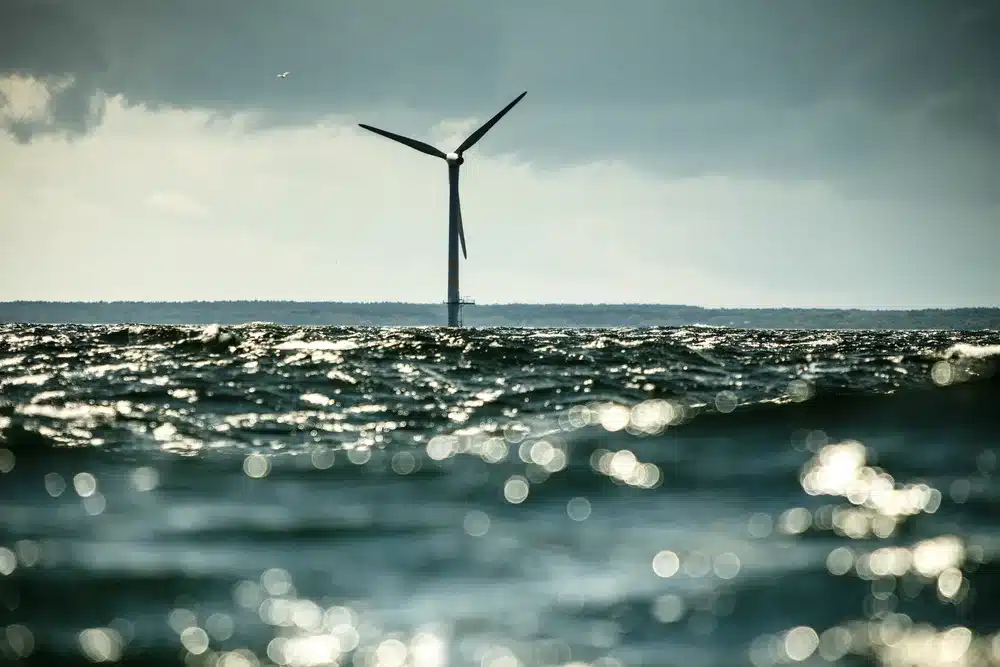
OSW technology relies on the placement of massive turbines in coastal waters, typically on the continental shelf, to harness wind speeds that are significantly higher and more stable than those found inland. Within the Philippine context, the nation’s vast archipelago provides a theoretical geographic advantage for such installations, with an estimated technical potential of 178 gigawatts (GW) within 200 kilometers of the shoreline.
Supporters of the technology argue that OSW provides a more consistent generation profile compared to the sharp fluctuations seen in solar photovoltaics and onshore wind. While solar energy peaks midday and onshore wind typically surges in the evening, OSW remains comparatively flat throughout the 24-hour cycle. Such a balanced output is highly beneficial for grid operators, as it simplifies the integration of clean energy and ensures a more reliable flow of electricity to the national power system.
For energy analyst Dianne Araral, the current war on Iran reinforces that the Philippines can no longer ignore the risks of its import-dependent energy strategy. “Offshore wind will not solve that immediately,” she wrote. “But if built at scale, it can become one of the few large indigenous resources capable of materially reducing exposure to imported fuel over time.”
The Economic Reality: High Costs and Rate Impacts
Despite the environmental promise, the primary hurdle for OSW in the Philippines is its high cost.
“OSW is expensive and impractical,” pointed out PhilStar columnist Bienvenido Oplas. “Too many logistical costs even before building it, like costs of port rental, land acquisition or rental, fishery compensation, huge ships rental, and so on.”
Aside from the P11/kWh ceiling, winning bidders will secure a 20-year guaranteed price contract that begins once the project is commissioned and registered in the wholesale electricity spot market (WESM). This long-term commitment means consumers must brace for even higher electricity bills through the Green Energy Auction-Allowance (GEA-All). This new charge will be added to the existing Feed-in Tariff Allowance (FIT-All), which already subsidizes intermittent renewable sources like solar and wind, further inflating the cost of power for the public.
For Araral, the strategic value of OSW is rooted in diversifying the energy mix, minimizing fuel-related risks, and achieving long-term decarbonization goals. “But only if the costs fall over time and only if implementation risk is controlled,” she warned.
Manila Bulletin columnist Myrna Velasco adds that the proposed ceiling price for OSW in the Philippines significantly exceeds rates established in neighboring markets. Regional comparisons show that Vietnam implements a maximum rate of ₱8.70 per kWh, while Taiwan provides a 20-year feed-in tariff fixed at ₱8.33 per kWh.
“Regulators seem to be bending over backwards to hand developers a golden windfall while leaving Filipino consumers to shoulder the financial punishment,” declared Velasco. “You are squeezing blood from a stone!”
Analyzing the correlation between high wind generation and inflation across Europe and Asia, Oplas suggests that several European nations are pursuing a path of economic decline. Despite being highly industrialized with the infrastructure for mass production and logistics, which typically keep prices stable, these regions are seeing rising inflation alongside their wind power expansion. This trend suggests that even advanced economies struggle to mitigate the inflationary pressures often linked to heavy reliance on wind energy.
“OSW will also require higher capex from NGCP (National Grid Corporation of the Philippines),” he argued. “Those OSW are far out, in far side of Mindoro, Palawan, Negros island, Guimaras, etc. This means higher transmission wheeling charge plus ancillary service by NGCP in our monthly electricity bill.”
Operational Risks and Grid Stability
Integrating 3,300 MW of wind power into the Philippine grid presents significant technical challenges. The entire strategy depends on seamless alignment; even minor setbacks in building the necessary connections could transform these multibillion-dollar investments into idle assets that produce electricity with no way to reach the national power system.
Moreover, the logistical demands of these maritime power plants are immense, as components are fully assembled on land before their deployment at sea. The massive turbines, specialized foundations, and intricate subsea cabling systems necessitate high-capacity, heavy-lift ports alongside dedicated staging zones. Any setbacks in upgrading or preparing these port facilities could trigger a domino effect, extending project timelines and significantly inflating construction costs.
A dense regulatory framework involving national, regional, and local authorities also triggers delays and increases costs, deterring investment. OSW development requires navigating a labyrinth of 80 permits across 25 government agencies, a process that remains both complex and time-intensive.
Securing land presents further hurdles, as obtaining rights-of-way is often stalled by unclear property titles, local disputes, and community resistance. While environmental and social compliance are necessary for sustainability, these rigorous requirements can extend project timelines without necessarily improving outcomes.
Additionally, the Philippine climate poses a unique engineering challenge for OSW development. The World Bank’s roadmap indicates that all potential domestic wind zones face wind speeds exceeding standard turbine design limits. In northern and eastern regions, extreme gusts can top 110 meters per second, making some areas either too risky or prohibitively expensive for development. Consequently, the Philippines must utilize specialized, typhoon-class turbines. This necessity shifts both the engineering requirements and the economic feasibility, as designing for local conditions adds high costs to every installation.
Despite its “green” label, OSW poses significant ecological risks. Research indicates these installations disrupt seabed habitats, fish behavior, and avian migration. Without comprehensive Marine Spatial Planning (MSP) to balance competing interests like conservation and shipping, Philippine waters face heightened collision risks and soaring insurance costs.
The lack of zoning already triggers social friction. In Ilocos Norte, the 2,000 MW BuhaWind project faces intense opposition from thousands of local fishers. Exclusion zones around turbines threaten to displace 6,000 workers from traditional grounds, jeopardizing regional food security and small-scale livelihoods while complicating the path to a sustainable energy transition.
(Also read: Cold Winter, Colder Economics: How Germany’s Energy Shift Backfired)
Is OSW Worth Pursuing?
The development of OSW in the Philippines is an ambitious endeavor, but its path is fraught with economic and technical obstacles. The upcoming auction in August will be the ultimate litmus test for investor appetite and the government’s ability to manage high-cost energy transitions.
While the desire to transition away from fossil fuels is noble, the Philippines must ask if OSW is the most efficient use of its limited resources. When more stable and potentially more cost-effective options, committing to the high price of OSW may lead to a long-term burden on Filipino consumers.
“Filipinos already face among the highest electricity rates in Asia,” highlighted Rappler’s ValVillanueva. “Careless OSW timing can push that burden even higher. This is the price impact that households cannot afford — and one that the government can still avert.”
In the global scene, OSW is facing a severe downturn. Industry forecasts have slashed 2030 capacity projections outside China by 28% as stalled auctions and scrapped contracts stifle momentum. Sector activity plummeted in 2025, with new site awards dropping 78% compared to the previous three-year average.
This contraction, most acute in Europe, reflects deepening economic and policy uncertainty. With investment decisions delayed and demand for developer services drying up, this once-flagship technology is struggling against a tide of rising costs and infrastructure hurdles, signaling a cautious global shift away from aggressive expansion.
The Philippines should treat these global setbacks as a clear warning. A balanced approach that prioritizes grid stability and affordability might suggest that while OSW can be a part of the energy mix, its current costs and risks make it a difficult primary solution for the nation’s energy crisis.
Sources:
https://www.wfw.com/articles/offshore-wind-in-the-philippines/
https://docs.nrel.gov/docs/fy25osti/92293.pdf
https://www.bworldonline.com/opinion/2026/03/09/734872/the-case-for-offshore-wind-energy/
https://www.philstar.com/business/2026/02/26/2510426/stable-nuclear-power-expensive-offshore-wind
https://mb.com.ph/2026/03/02/why-must-filipinos-pay-for-costliest-offshore-wind-in-the-world
https://www.philstar.com/business/2026/01/19/2501877/why-green-energy-way-harder-it-looks
https://www.unep-wcmc.org/en/news/how-offshore-wind-projects-can-affect-marine-migratory-species
https://mb.com.ph/2025/12/08/who-wants-to-pay-14kwh-for-offshore-wind
https://www.rappler.com/voices/thought-leaders/analysis-danger-high-cost-renewable-energy