

Table of Contents
The Department of Energy (DOE) is banking on the restoration of major power plants and the accelerated deployment of battery energy storage systems (BESS) to stabilize the Visayas grid, which has been grappling with recurring yellow and red alerts for more than a month due to prolonged outages and seasonal generation constraints.
Energy Undersecretary Mario Marasigan said the region’s power supply challenges stem from a combination of forced outages at large conventional power plants and reduced output from biomass and hydropower facilities during the dry season.
Speaking in an interview with DZBB, Marasigan said the Visayas has been experiencing grid alerts since May 12, with some instances resulting in manual load dropping or rotational brownouts.
Major Plant Repairs
According to the DOE, around 673.4 megawatts (MW) of generating capacity in the Visayas remains unavailable due to forced outages and extended maintenance activities.
Among the facilities expected to return are a 150-MW power plant in Panay, which is targeted to resume operations by July 3, and two 169-MW generating units in Toledo, Cebu, that are scheduled to complete repairs by the end of August.
Marasigan said the prolonged outages have significantly affected the region’s reserve levels and overall grid reliability. At the same time, several renewable energy facilities have been producing below their rated capacities because of seasonal factors.
“For example ‘yun pong ating mga biomass power plant…hindi po milling season ngayon ng sugar cane kung kaya’t yung kanilang feedstock ay kulang kaya derated po sila,” Marasigan said. (“For example, our biomass power plants are affected because it is not currently the sugarcane milling season, so their feedstock supply is insufficient, and they are operating at reduced capacity.”)
He added that some hydropower facilities have also been generating less electricity due to lower water levels brought about by the dry season.
The DOE estimates that derated facilities account for an additional 168.6 MW of unavailable capacity in the Visayas, further tightening supply conditions.
Battery Storage Seen As Immediate Solution
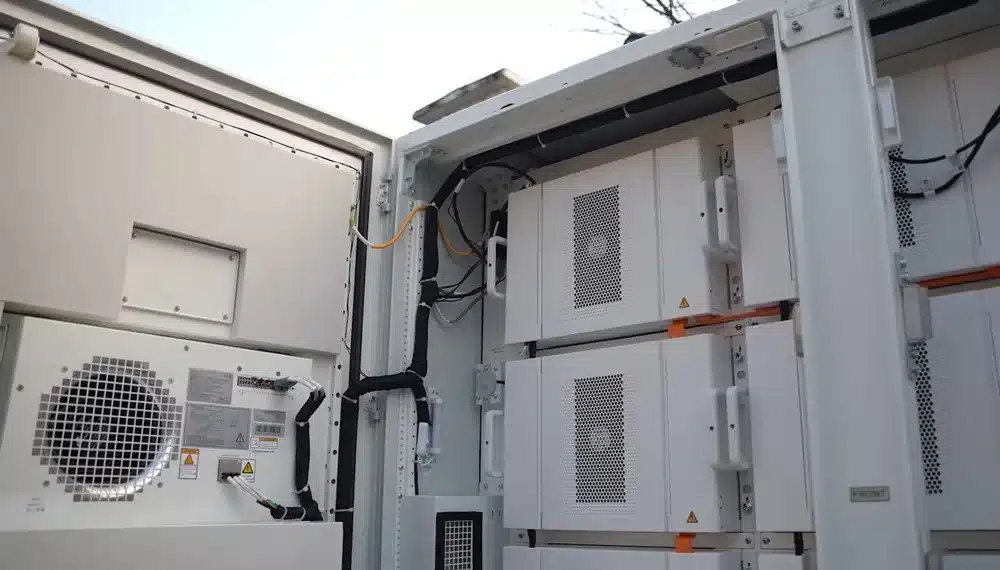
While the return of major generating units is expected to improve conditions in the coming months, the DOE believes battery energy storage systems will provide the quickest relief for the region.
Marasigan said the agency, together with the Energy Regulatory Commission, Independent Electricity Market Operator of the Philippines, and National Grid Corporation of the Philippines, conducted simulations to identify immediate measures that could strengthen reserves and reduce the likelihood of future alerts.
“Gumawa na po ng paraan ang Department of Energy. Nagpagawa po tayo ng simulation… ano ba yung kailangan ng Visayas,” Marasigan said. (“The Department of Energy has taken action. We commissioned simulations to determine what the Visayas needs.”)
Based on those studies, the DOE concluded that the Visayas requires at least 170 MW of battery storage capacity.
“Kailangan pong makapagtayo tayo ng at least 170 MW po na battery energy storage system,” Marasigan said. (“We need to establish at least 170 MW of battery energy storage systems.”)
The DOE expects about 70 MW of battery storage projects to be completed within June, while another 130 MW could be finished within the next two months.
Battery storage facilities are designed to absorb excess electricity during periods of high generation and release it when demand rises, particularly during evening hours.
According to Marasigan, this is especially important in the Visayas, where solar capacity continues to grow, particularly in Negros, but can only contribute power during daylight hours.
Building Reserves
The DOE noted that reserve margins in the Visayas decline sharply at night, when solar generation disappears and demand remains elevated. This has been a key factor behind recurring yellow and red alerts despite electricity imports from neighboring grids.
Marasigan said Mindanao continues to export power to the Visayas despite recent earthquake-related outages that temporarily affected several generating units in the southern island.
Beyond battery storage, the government is also studying other measures to strengthen reserves, including the deployment of a 70-MW power barge to Panay and the installation of additional backup generation facilities.
For the longer term, the DOE is encouraging investments in new conventional and flexible generation projects, including natural gas facilities, to ensure that growing electricity demand in the Visayas can be met without recurring supply disruptions.
With major power plants expected to return between July and August and nearly 200 MW of battery storage projects moving toward completion, energy officials are hoping the region’s power situation will gradually stabilize in the months ahead.
Source:
https://www.youtube.com/watch?v=BRLbl0yJ7L4
https://tribune.net.ph/2026/06/13/power-relief-eyed-as-visayas-plants-restore-operations