

Table of Contents
The Institute for Climate and Sustainable Cities (ICSC) has opposed proposals to ease restrictions on coal-fired power plants in Negros and Bohol, saying recurring electricity supply alerts in the Visayas underscore the need for flexible energy sources and better localized power planning rather than additional coal capacity.
The Quezon City-based climate and energy policy group said persistent supply constraints in Cebu, Negros and Bohol require a combination of dependable generation from indigenous resources, such as geothermal energy, and flexible technologies, including solar power and battery energy storage systems (BESS).
In a statement, ICSC said recurring yellow and red alerts in the Visayas reflected gaps in localized energy planning, particularly the need for power sources that can respond quickly to supply disruptions and changing demand.
The group argued that building more coal-fired power plants would not address the immediate problem, as new projects take years to develop, require extensive transmission infrastructure and expose consumers to fuel price risks.
Alberto Dalusung III, ICSC energy transition adviser, said prolonged unplanned outages at several coal-fired power plants showed that the challenge extended beyond the amount of installed generation capacity.
“Facilities like Therma Visayas Inc. Unit 1 and Unit 2 — which have suffered extensive unplanned outages — were only commissioned in 2019. At just seven years old, these failures are clearly not due to aging equipment,” Dalusung said.
“Rather, they stem from how we operate our power system — forcing inherently inflexible thermal plants to constantly cycle up and down to match fluctuating demand. Adding more coal plants into a system that desperately needs flexibility will only repeat this damaging pattern,” he added.
Prolonged Outages
ICSC cited four generating units in the Visayas that experienced prolonged forced outages in 2026, coinciding with recurring grid alerts.
Therma Visayas Inc. Unit 1 and Unit 2, both located in Toledo City, Cebu, each have a capacity of 150 megawatts (MW). Unit 1 was offline for 148 days from May 3 to Sept. 28, while Unit 2 was unavailable for a total of 167 days across periods from March to August and several days in September. Both units were commissioned in 2019.
Panay Energy Development Corp. Unit 3, a 150-MW facility in La Paz, Iloilo City, had been offline for 44 days since Aug. 29, with its target return pushed to late October. The unit was commissioned in 2017.
Cebu Energy Development Corp. Unit 1, an 82-MW generating unit in Toledo City, was also offline for 42 consecutive days between July and September. The facility was commissioned in 2010.
The outages highlighted the risks of relying heavily on large thermal power plants that may be unable to adjust quickly to changing grid requirements, ICSC said.
Coal accounts for about 60% of the country’s electricity generation, leaving the power sector heavily exposed to global fuel markets. The group said additional coal capacity would not provide an immediate solution to the Visayas’ localized supply problems and could add fuel-cost risks that ultimately affect consumers.
Geothermal And Biomass Potential
Instead of expanding coal generation, ICSC called on energy planners to prioritize indigenous resources that can meet demand within individual island subgrids.
Negros, in particular, has geothermal and biomass potential that could support local electricity requirements and reduce dependence on imported fuels, the group said.
It added that sufficient baseload capacity at the national level did not necessarily guarantee reliable electricity in specific areas, particularly where transmission constraints and localized shortages limited the availability of power.
The group said energy planning should account for the distinct requirements of island grids, combining dependable local generation with sufficient transmission capacity and reserves.
Flexible Resources
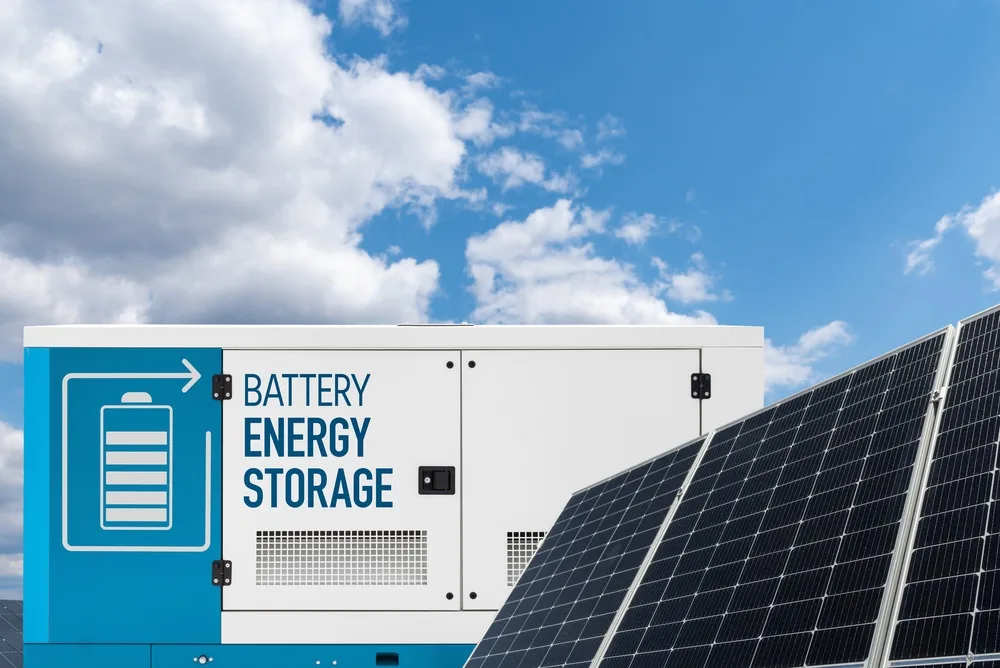
ICSC also urged faster deployment of solar power and battery storage near major demand centers to help the grid respond to sudden supply disruptions.
Solar facilities can generate electricity during daylight hours, while BESS installations can store excess energy and discharge it during peak demand periods or when a major generating unit goes offline.
The technologies could provide faster-responding capacity without requiring conventional thermal plants to repeatedly ramp up and down to accommodate fluctuations in electricity demand, the group said.
“Solar and BESS should not be treated merely as a short-term fix to the unfolding power crisis in the Visayas. They are the core solution for both the short and long term,” Dalusung said.
“The solution should therefore focus on technologies that can be deployed quickly and provide the flexibility that the grid actually needs, particularly solar energy and battery storage,” he added.
The Department of Energy said in May that the country’s moratorium on new coal-fired power plants remained in effect, although existing rules allow exceptions for certain projects, including those deemed necessary to avert an imminent power supply crisis.
In September, the agency outlined plans to add 253 MW of ancillary service capacity across the Visayas, including battery storage projects in Cebu, Leyte, Negros, Bohol and Panay. It also cited plans for additional generation capacity and a transmission interconnection to improve power security in Western Visayas.
A joint congressional hearing in Bacolod City on Oct. 3 examined recurring power interruptions across the Visayas, including generation and transmission problems, and sought immediate and long-term measures to stabilize electricity supply.
ICSC said improving reliability would require a diversified mix of energy sources, adequate transmission infrastructure, and sufficient reserves, rather than relying on additional generation capacity alone.
Source:
https://www.dailyguardian.com.ph/blog/icsc-coal-ban-easing-wont-fix-visayas-power-woes
https://www.manilatimes.net/2026/10/21/regions/icsc-says-visayas-needs-flexible-power/2449640