

Table of Contents
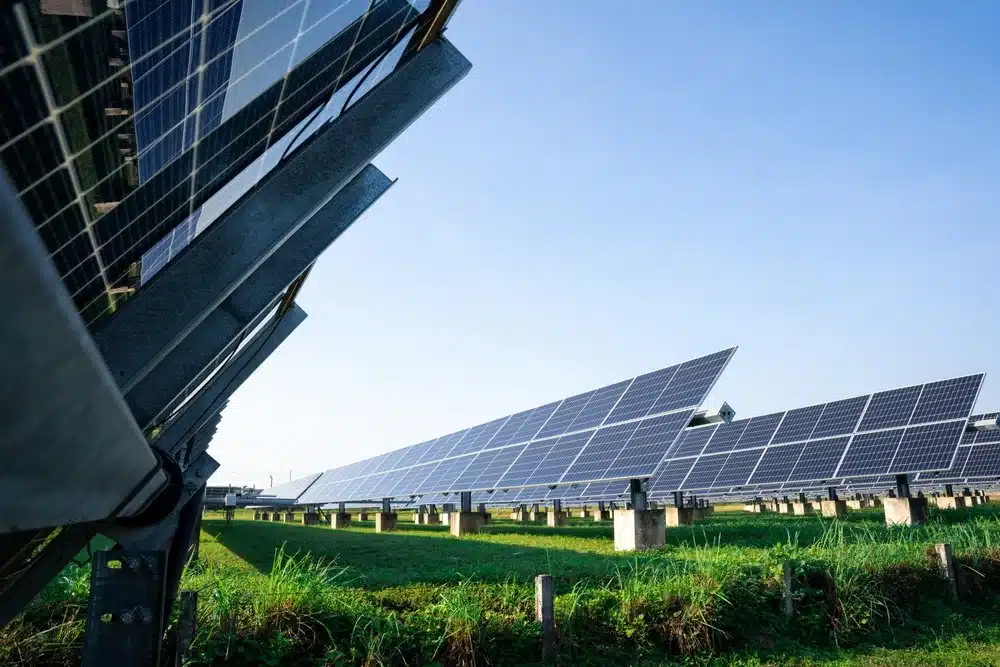
CITICORE Renewable Energy Corporation (CREC) has energized its 69-megawatt peak (MWp) Citicore Solar Negros Occidental 2 facility, strengthening power supply in the Visayas grid just in time for peak summer season and the ongoing global energy crisis.
Located across 69 hectares in Barangay Eustaquio Lopez, Silay City, the project expands CREC’s solar footprint in Negros Occidental, bringing its total installed capacity in the area to 94 MWp when combined with the existing 25-MWp Citicore Solar Negros Occidental 1 plant.
The newly energized facility is designed for further expansion up to 100 MWp, signaling additional capacity potential as demand in the region continues to grow.
CREC President and CEO Oliver Tan said the project’s completion underscores the company’s ability to deliver capacity when it is most needed. “Delivering this project ahead of the summer peak demonstrates our ability to deliver dependable capacity when the system needs it most,” he said.
He added that the development highlights the company’s strategic expansion beyond Luzon. “As one of our largest solar plants in Visayas to date, it demonstrates that our growth strategy extends beyond Luzon and [is] anchored in strengthening energy security in the Visayas,” Tan said.
Alignment With National Clean Energy Agenda
The project is part of the Department of Energy’s Green Energy Auction Program (GEAP) Phase 2, which aims to accelerate investments in renewable energy. Citicore Solar Negros Occidental 2 is the sixth project completed by CREC under the program.
Tan said the company is on track to complete all 12 of its awarded GEAP-2 projects, with four additional plants targeted for energization by April and the remaining two expected in the following months.
The expansion comes as the Philippines moves with greater urgency to scale up renewable energy capacity amid rising global oil prices linked to geopolitical tensions in the Middle East.
Energy Secretary Sharon Garin said accelerating power investments is critical to strengthening the country’s energy sector and ensuring it can meet growing electricity demand while reducing exposure to volatile foreign energy markets.
Renewable energy projects have dominated the government’s fast-tracked investment pipeline, with approvals under the Board of Investments’ green lane program reaching P315.67 billion in the first quarter alone.
The push aligns with national targets to increase the share of renewable energy in the Philippines’ power mix to 35% by 2030 and 50% by 2040, with additional solar capacity seen as key to improving energy security and stabilizing supply, particularly during peak demand periods.
Integrating Energy And Agriculture
Beyond power generation, CREC is also advancing its AgroSolar initiative at the site, allowing agricultural activities to continue beneath solar panels. The approach supports food production while maximizing land use.
“Negros Occidental has long been both an agricultural heartland and a renewable energy hub,” Tan said. “By pairing solar generation with crop production, we demonstrate how energy infrastructure can co-exist with agriculture.”
The initiative is intended to boost food security and provide additional livelihood opportunities for local farmers, reinforcing the socio-economic benefits of renewable energy developments.
The Negros Occidental expansion forms part of CREC’s broader “5GW in 5 years” roadmap, aimed at rapidly scaling up its renewable energy portfolio nationwide.
With multiple projects nearing completion and further expansions planned, the company is positioning itself to play a larger role in ensuring grid reliability and advancing the Philippines’ transition to cleaner energy sources.
Source:
https://rpnradio.com/bacolod-69mwp-solar-power-plant-energized-in-silay-city/