

Table of Contents
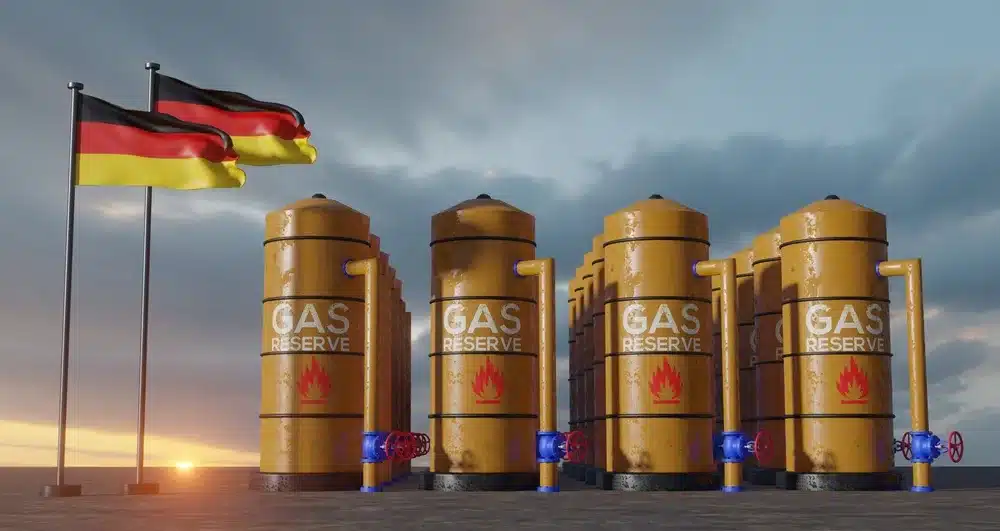
In the winter of 2025 to 2026, Germany plunged into a deep and politically charged natural gas crisis. Storage facilities, normally a buffer against cold spells, sank to historic lows, with fill levels reported at just 32.9%, down sharply from 56.4% at the same time a year earlier. The rapid drawdown coincided with surging heating demand as households grappled with one of the coldest winters in recent memory.
Germany’s gas infrastructure, once touted as robust and reliable, suddenly looked fragile. Yet this wasn’t a short-lived weather aberration—the crisis unfolded amid broader structural vulnerabilities that were years in the making. Observers pointed to logistical bottlenecks at liquefied natural gas (LNG) terminals and supply chain hiccups that stopped LNG tankers from docking at key import facilities off the coast of Rügen, effectively cutting off one of the few alternative supply routes Germany had developed since halting Russian pipeline gas imports.
At the same time, policymakers found themselves under intense political pressure to balance climate goals with economic realities. The government moved to revise ambitious green energy laws that had been central to the national Energiewende, or energy transition strategy, sparking debate over whether the country’s pursuit of a rapid green transition contributed to or exacerbated its energy woes.
Recently, the government agreed to soften a previously ambitious renewable heating law, scrapping a mandate that new heating systems had to draw at least 65% of their energy from renewable sources, such as heat pumps. The recent reform changes this requirement, permitting homeowners to rely on oil and gas for their heating needs. Critics labelled the change a rollback of climate commitments, while proponents defended it as necessary to protect households from soaring costs.
(Also read: Northern Negros Consumers Unite Amid Visayas Power Supply Concerns)
From Coal and Nuclear Phase-Out to Gas Dependency
To understand the 2026 gas crisis, one must look back at decades of German energy policy. The legislation for Germany’s Energiewende, which literally means “energy turnaround”, was passed in 2010 as a broad political commitment to decarbonize the economy by replacing fossil fuels and nuclear power with renewables. The policy has several key pillars:
- Phasing out nuclear power accelerated after the 2011 Fukushima disaster.
- Steadily reducing coal use, with hard coal plants slated for retirement.
- Massive expansion of wind, solar, and biomass technologies.
- Legislative mandates and subsidies to accelerate green energy deployment.
Today, Germany has become one of Europe’s leaders in renewable electricity generation, with renewables supplying 59% of its power.
The complete exit from nuclear power in 2023 removed an energy source that had provided substantial baseload and dispatchable power with low greenhouse gas emissions. In theory, renewables, supported by flexible gas plants and storage, could compensate for the loss, but in practice, this required meticulous planning and robust backup generation fleets and storage infrastructure.
Meanwhile, coal plants, once the backbone of Germany’s electricity system, were slated for retirement or reduced operations as part of long-term decarbonization commitments.
Critics say that this dual phase-out left Germany structurally more dependent on natural gas, particularly for electricity generation during periods of weak renewable output (so-called Dunkelflaute) and for district heating in winter. This was manageable when Russian pipeline gas provided a reliable backbone. But following Russia’s full-scale invasion of Ukraine in 2022, EU sanctions and political shifts ended those deliveries, forcing Germany to pivot abruptly toward LNG imports and other pipeline sources.
But the sudden end of Russian pipeline gas didn’t eliminate Germany’s gas dependency; it just redirected it. Pipeline imports are now led by Norway, which accounted for roughly 44% of total gas inflows in 2025, alongside other EU neighbors. At the same time, newly built LNG terminals opened access to global suppliers, including the US. Combined pipeline and LNG imports climbed more than 16% in 2025, reflecting sustained demand.
However, when extreme winter conditions disrupted LNG tanking operations at key terminals, gas import consistency became a vulnerability rather than a strength, highlighting that diversifying suppliers is not the same as ensuring reliable supply under strain.
The 2026 Crisis Unfolds: From Storage Declines to Economic Strain
By early 2026, German gas storage hit levels scarcely seen before. Estimates ranged from about 25% to 32% of capacity at a time when demand was surging amid one of the colder winters in recent memory.
French columnist Michael Santi described Germany’s energy path as “economic suicide,” pointing to weakening heavy industry. Steel production fell about 10%, while car output dropped from 5.6 million vehicles in 2017 to just over 4 million in 2025, signaling strain in core sectors of Europe’s largest economy.
“A decarbonized economy requires more steel, more copper, more chemicals, more machinery, more infrastructure. One does not build hydrogen, smart grids, batteries, or wind turbines on an industrial desert,” he wrote. “The green transition presupposes a robust productive base. Yet in 2026, Germany is destroying more capacity than it is creating.”
He argued for a course correction rooted in realism rather than ideology. Instead of abandoning climate goals, he urged energy pragmatism, prioritizing affordable and reliable supply, including nuclear power, to protect Germany’s industrial base during the transition.
Critics, including business groups and some industrial analysts, warned that continued tight storage combined with prolonged cold spells could ripple through the economy, not just in Germany but across Europe, affecting production, inflation, and the competitiveness of key sectors.
Meanwhile, high gas prices also fed inflationary pressures in consumer electricity and heating bills, prompting government interventions aimed at lowering consumer costs. The government is covering part of the electricity grid charges, cutting the power tax on manufacturing firms permanently, and scrapping the gas storage levy altogether. The objective is straightforward: bring down energy bills across the board.
(Also read: Eastern Visayas LGUs Unite To Accelerate Clean Energy Transition)
Lessons for the Philippines
Germany’s experience in 2026 offers important lessons for countries like the Philippines that are considering their own energy transitions. The rapid phase-out of nuclear and coal, combined with an ambitious expansion of renewables without adequately increasing backup capacity and storage, left Germany vulnerable to external shocks and supply disruptions. Timing and sequencing energy transitions carefully are essential to maintain system reliability.
This means that phasing out reliable baseload sources before sufficient alternatives are online can threaten energy security and affordability, especially in a system where renewables have yet to scale to a level that can consistently meet demand. Instead of an abrupt shift, what Germany’s 2026 crisis suggests is the importance of sequencing transitions to ensure that dependable generation and storage are in place before phasing out conventional capacity. For the Philippines, this means strengthening the energy mix with flexible, reliable sources—including gas, coal, and even nuclear — while scaling renewables at a pace that does not jeopardize supply or inflate prices for consumers and industry.
Structural resilience is equally vital. Germany’s crisis demonstrated the risks of reducing firm energy capacity before sufficient alternatives were operational. Investments in grid reliability, strategic storage, and dependable dispatchable power are necessary to prevent similar disruptions.
In the Philippines, grid modernization and energy storage are advancing, but gaps remain. The Department of Energy (DOE) added 160 megawatts (MW) of storage and nearly 1 gigawatt (GW) of new capacity in 2025, yet this is only a fraction of what is needed to support growing renewable output. Many projects still await system impact studies, while high costs and fragmented regulations slow smart grid deployment and the integration of variable renewable resources.
Public support for energy transitions also depends on tangible benefits. When costs rise and reliability declines, confidence in policies erodes. Ensuring affordable and dependable energy for households and industry is crucial to maintain political and social backing during any major energy shift.
With Filipino households spending about 10 % of their income on electricity, high costs are already putting pressure on family budgets. As Eduardo Araral of the Lee Kuan Yew School of Public Policy warned: “We should not rush to it [energy transition] and abandon our legacy simply because we want to be green. I think we have to do this in a very, very pragmatic way, and the first and foremost principle really is energy security and affordability.”
In an emerging economy where poverty remains significant, and many households are vulnerable to price shocks, policies that drive up costs or compromise reliability risk undermining public support for transitions that do not also deliver clear economic benefits.
Sources:
https://xpert.digital/en/the-fossil-dark-doldrums
https://en.wikipedia.org/wiki/Energiewende
https://busenq.com/germanys-energy-balancing-act-gas-supplies-lng-push-and-the-renewable-transition/
https://michelsanti.fr/deindustrialization/germany-europe
https://www.bundesregierung.de/breg-de/aktuelles/senkung-energiepreise-haushalt-2358526
https://www.credenceresearch.com/report/philippines-grid-modernization-market