

Table of Contents
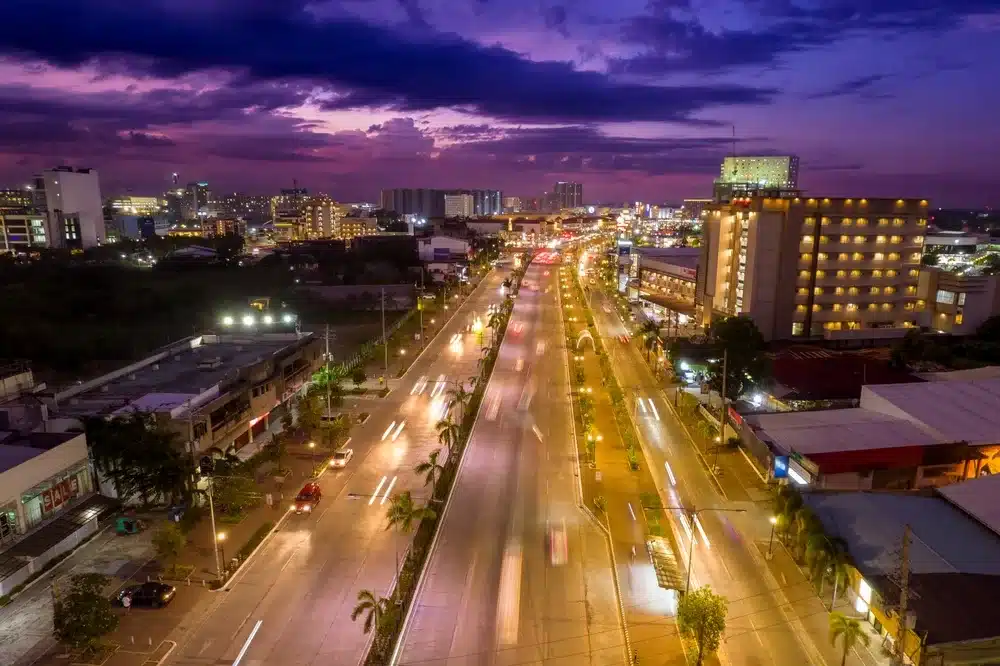
Panay Island could face a severe power shortage by 2026, the Panay Energy Development Corporation (PEDC) warned, unless a new baseload plant is built to meet the island’s rapidly growing electricity demand.
PEDC, a Meralco subsidiary, is a power-generation company that operates coal-fired plants in Iloilo City.
PEDC Executive Vice President Antonio Cabalhug Jr. explained that Panay’s booming population and economy are pushing electricity demand close to the island’s base load capacity, with consumption expected to rise nearly 7%, outpacing previous growth targets of 4 to 5% by 2026.
“If it follows that trend, we expect that by the end of December 2026, the base load and demand will be balanced. We need to have an additional capacity,” he stressed. “We need a base load in Panay because the island has a growing economy.”
Cabalhug noted that Panay’s electricity demand currently stands at about 540 megawatts (MW) and is projected to climb to 600 MW by 2026.
(Also read: Typhoon Tino Cuts Power to 1.4M Homes in Visayas)
Panay’s growing economy
Panay is made up of four provinces: Aklan, Antique, Capiz, and Iloilo.
Western Visayas, encompassing Panay and Guimaras Islands, grew 4.3% in 2024, reaching a ₱641.76 billion economy. Ranking 8th among the country’s 18 regions, it contributed 2.9% to the national gross domestic product (GDP). Key drivers included professional services, utilities, health and social work, and accommodation and food services.
Tourism in Western Visayas surged in 2024, with arrivals rising 10.25% and generating ₱74 billion in revenue, according to the Department of Tourism (DOT). Capiz stood out with the highest growth rate of 43.73%, while Iloilo City reached the milestone of one million visitors. Leading the region, Aklan, home to Boracay, welcomed over 2.2 million tourists, reaffirming its status as the top destination.
However, Panay’s economic growth faces critical challenges, particularly in energy infrastructure. As the Daily Guardian’s Francis Allan Angelo wrote, “The energy quandary in Panay Island following two power blackouts in January and March 2024 is not just a local concern; it reflects a national issue of infrastructure inadequacy and bureaucratic inertia.”
Panay’s energy challenges
Panay’s rapid economic growth has been repeatedly tested by persistent energy challenges, highlighting the urgent need for a more reliable and resilient power infrastructure.
- Massive 4-day blackout
On January 2, 2024, Panay and its neighboring islands were hit by a massive, region‑wide blackout. The outage, triggered by unscheduled shutdowns of key power plants, wiped out roughly 451 MW of the island’s 656‑MW capacity.
By the third day of the Panay-wide blackout, the National Grid Corporation of the Philippines (NGCP) urged better energy planning to ensure each island has sufficient power from a balanced mix of fuels and technology.
Local officials, however, placed blame on NGCP, citing repeated delays in upgrading transmission lines. Iloilo City Mayor Jerry Treñas called on Congress to investigate the crisis, while Senate President Juan Miguel Zubiri demanded transparency and a clear plan to prevent future outages.
Iloilo endured roughly ₱3.8 billion in economic losses during the four-day blackout, Governor Arthur R. Defensor, Jr. reported. Iloilo City alone lost about ₱500 million per day, totaling nearly ₱2 billion over the outage, according to Mayor Geronimo P. Treñas.
Meanwhile, the Capiz Provincial Planning and Development Office reported that the province, including its capital, Roxas City, suffered economic losses exceeding ₱550 million.
- Underinvestment of electric cooperatives (ECs)
Another problem compounding Panay’s energy issues is the chronic underinvestment in power distribution infrastructure. A report by the Institute of Contemporary Economics (ICE) found that the seven ECs serving Panay and Guimaras have spent only ₱2.38 billion of their ₱10.52 billion capital expenditure budget from 2022 to September 2024. According to ICE, this level of spending, roughly 3 to 4% of revenue, barely covers maintenance and falls short of what is needed to ensure reliable power delivery.
The report warned that such underinvestment leaves the grid ill-prepared for emerging challenges, including extreme weather events, renewable energy (RE) integration, and modernizing customer service infrastructure. While ECs continue to play a role in missionary areas, ICE noted that their original mandate may no longer be adequate for rapidly developing regions like Panay and Guimaras, which require more sophisticated and resilient power distribution systems.
- Yellow alerts
After the September 30 earthquake disrupted the power grid, the NGCP placed the Visayas on yellow alert on October 11 due to multiple plant outages and low reserves. The alert was lifted the same evening, but the Cebu Electricity Rights Advocates (CERA) warned that the event exposed ongoing vulnerabilities in the grid’s capacity to handle disasters and supply shortfalls.
Earlier on August 6, the Visayas grid was placed on yellow alert as reserves fell and supply stability was threatened. Seventeen power plants tripped, six operated below capacity, and a shutdown cut Mindanao imports by 30 MW. Peak demand reached 2,369 MW against 2,538 MW supply, with reserves dropping from 169 MW to 98 MW by August 7, raising blackout risks.
The incident reflects a recurring pattern of energy stress in the Visayas. In May 2024, 16 plants went on forced outage. By August 2025, the grid had already faced four yellow alerts that month, driven by rising demand and limited supply from neighboring regions, highlighting persistent vulnerabilities in the system.
- Renewables rollout
In 2023, the Department of Energy (DOE) projected that Western Visayas could become the country’s leading hub for RE, given its expanding portfolio of clean-energy projects and vast untapped potential.
A year later, the Visayas’ power pipeline had shifted decisively toward clean energy. Of the 25 committed projects set for rollout in 2024 and 2025, most were renewable, representing 1,982 MW in potential capacity. DOE data showed solar leading at 38.37%, followed by wind at 26.01% and battery storage at 15.64% with the rest made up of geothermal, hydro, biomass, and a small share of oil and coal.
However, global experience shows that rapid reliance on renewables comes with challenges.
In Spain, experts linked the April blackout to the grid’s growing dependence on solar power and the loss of traditional and nuclear backup capacity. In 2024, Germany increased gas-fired power generation by 79% in November to make up for wind output that had fallen about 25% below year-earlier levels for two consecutive months. The Netherlands offers another warning: its rapid green expansion has outpaced grid upgrades, creating severe congestion as demand and intermittent solar and wind supply overwhelm existing infrastructure.
In the case of Panay, Cabalhug explained that the intermittency of RE and the grid’s technical limitations mean PEDC cannot fully replace base load plants. “We’re using electricity 24/7. We cannot afford to just use it for four hours and then sleep the whole 20 hours without power,” he stressed. “We really want a baseload plant. With only a year before the island’s demand matches its base load.”
(Also read: Controversy Erupts over Cebu’s Waste-to-Energy Project)
Urgent need for baseload power
The recurring yellow alerts in the Visayas grid, including the August 2025 events, highlight ongoing vulnerabilities that could drive electricity prices higher, MORE Electric and Power Corporation warned. “Unfortunately, we in the Visayas are the hardest hit. Panay Island, particularly, is at the tail-end of NGCP’s transmission line network,” stated Niel Parcon, MORE Power Vice President for Corporate Energy Sourcing and Regulatory Affairs.
Following the 2024 Panay blackout, Treñas called on power generation companies to invest in baseload plants on the island. “Because Iloilo is growing by 9.6 percent for its GDP (gross domestic product), so that will mean economic activities and the need for additional baseload,” he highlighted.
Panay cannot afford power interruptions as its economy and population surge. Without reliable baseload energy and a strengthened grid, blackouts could derail growth, disrupt businesses, and threaten the island’s progress, putting years of economic gains at risk and undermining its potential as a key hub in the Visayas.
Sources:
https://www.meralcopowergen.com.ph/about/facilities/visayas/pedc
https://guimaras.gov.ph/news-and-updates/western-visayas-posts-4-3-economic-growth-in-2024-psa
https://www.pna.gov.ph/index.php/articles/1245631
https://dailyguardian.com.ph/cry-of-panay
https://www.philstar.com/headlines/2024/01/04/2323309/massive-power-outage-hits-western-visayas
https://newsinfo.inquirer.net/1884186/ngcp-explains-takes-heat-as-panay-outage-drags-on
https://dailyguardian.com.ph/panay-power-grid-at-risk-due-to-underinvestment-by-electric-coopsys
https://mirror.pia.gov.ph/news/2023/06/13/wv-as-ph-renewable-energy-capital-doe
https://www.pna.gov.ph/articles/1233920
https://www.telegraph.co.uk/business/2025/10/09/spain-at-risk-of-fresh-net-zero-blackouts
https://www.bbc.com/news/articles/cn40y9yxkgvo
https://www.sunstar.com.ph/cebu/group-pushes-for-new-power-projects-amid-yellow-alert
https://www.philstar.com/nation/2025/08/06/2463374/visayas-grid-yellow-alert
https://cebudailynews.inquirer.net/574529/yellow-alert-raised-for-visayas-grid-on-tuesday-ngcp