

Table of Contents
During a radio interview, Department of Energy (DOE) Undersecretary Mario Marasigan emphasized that coal facilities remain crucial in addressing the Visayas’ power problems.
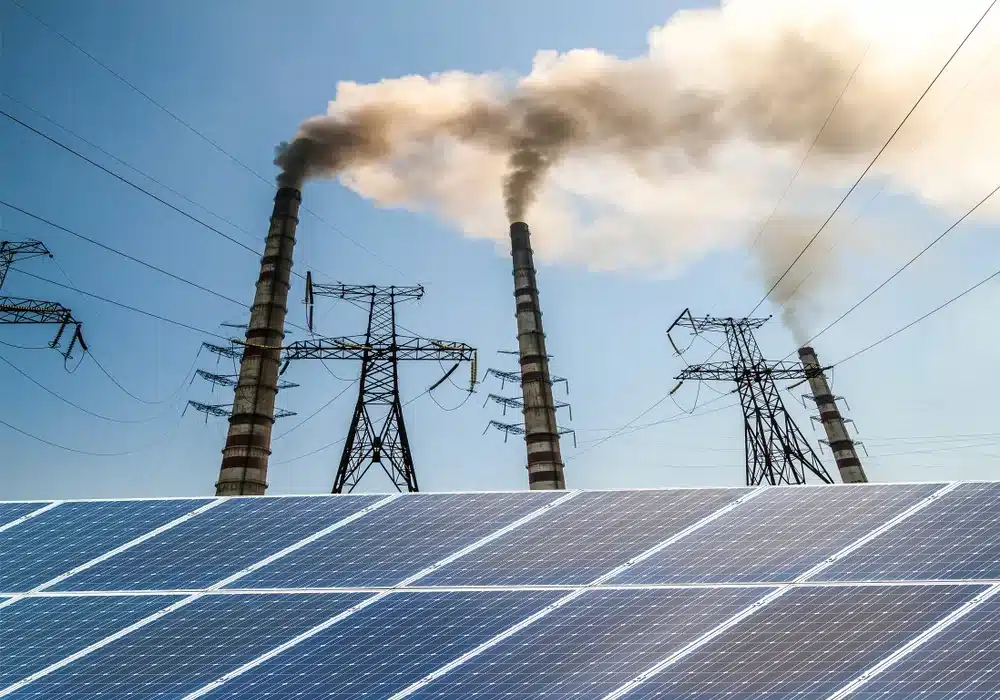
“Ang nagdidikta ng capacity natin sa Visayas ay ‘yung malalaki nating planta na conventional, ‘yung mga coal facilities. ‘Yun po talaga ang inaasahan natin. Marami po tayong solar, lalo na po sa Negros pero ‘yun ay available lang during daytime. Sa gabi naman po nangyayari ang ating yellow and red alerts,” he said. (The capacity in the Visayas is largely determined by our big conventional plants, especially coal facilities. These are what we really rely on. We have many solar plants, especially in Negros, but they are only available during the day. Yellow and red alerts usually occur at night.)
Since May 12, the Visayas grid has been experiencing recurring red and yellow alerts. Red alerts indicate critical power supply conditions, while yellow alerts signal thin operating reserves. Red alerts can trigger manual load dropping or rotational brownouts.
(Also read: DOE Eyes Battery Storage Boost As Key Visayas Power Plants Near Return)
Reasons for the Power Alerts
Marasigan explained that the alerts started when several power plants began operating at derated capacity due to the summer season, meaning they are unable to deliver their full output. Several large power plants have been on outage, with three major facilities still offline. Two 169-megawatt (MW) units in Toledo, Cebu, are expected to return by the end of August, while a 115-MW plant in Tanay is scheduled to resume operations on July 3.
However, the undersecretary emphasized that the repairs and maintenance are scheduled activities that were extended due to the Visayas’ urgent power needs. This means that the plants had been operated beyond their intended capacity, making proper maintenance necessary.
In fact, in 2024, DOE Secretary Raphael Lotilla raised the need to reassess limits on power plant maintenance downtime, arguing that longer outages may help improve overall grid reliability.
“We should allow also the plants sufficient time to do their maintenance work. We’re comparing the amount of time that we allow the plants to undertake those,” he stated, pointing to Japan’s maintenance system, where outage schedules differ depending on plant technology to ensure thorough inspection and upkeep. He said extending maintenance windows could support more comprehensive checks and improve long-term plant efficiency.
Marasigan also stressed that the Visayas’ power shortfall was not solely due to offline conventional plants. Biomass facilities, which use sugarcane waste and other agricultural waste as fuel, are currently operating at reduced capacity because it is not sugarcane milling season, leading to a shortage of feedstock. Meanwhile, several hydropower plants in the region are also generating less electricity as summer conditions have caused water levels to drop.
Renewable Energy Is Not Enough
Recently, DOE Secretary Sharon Garin acknowledged the need for additional baseload capacity in the Visayas to improve grid reliability amid recurring yellow alerts.
Baseload refers to the minimum level of continuous electricity demand that must be met at all times, typically supplied by steady-output plants such as coal, natural gas, and large hydropower facilities.
The agency stressed that firm, dependable generation is essential to support the region’s expanding renewable energy (RE) capacity and ensure a stable and consistent power supply.
In September 2024, the DOE reported that most committed power projects in the Visayas are RE-based. Solar accounts for the largest share of rated capacity at 38.37%, followed by wind at 26.01% and battery energy storage systems (BESS) at 15.64%.
Still, high solar generation in the Visayas failed to prevent power alerts and may have even contributed to grid stress, according to Energy Regulatory Commission (ERC) Chairman Francis Saturnino Juan. “We are not simply facing an afternoon and early evening shortage; we are facing a flexibility shortage in the hours after the sun goes down,” he noted.
Juan explained that solar power helps strengthen the grid during the day and typically peaks around 2 p.m., but output declines by late afternoon as sunlight weakens. This drop coincides with rising evening demand, creating a gap that strains grid reliability.
The red alerts, which lasted from late afternoon to midnight, highlight the system’s limited flexibility. While the grid can absorb high solar output during the day, it struggles to replace it once generation falls in the evening.
For now, the DOE is working to reinforce short-term electricity supply in the Visayas through a combination of interim and modular solutions, including power barges, diesel generator sets, and battery energy storage systems. Officials are evaluating options such as a 70-MW bunker-fueled barge, a 50-MW natural gas-fired barge, a 20-MW modular diesel facility, and at least 20 MW of additional battery storage capacity.
Marasigan added that around 69 MW of new RE projects are also expected to come online in the near term, with the Mindanao-Visayas Interconnection currently operating at its full 450-MW transfer capability to help ease supply pressures in the region.
But he also said that long-term solutions are focused on building large power plants, including a 150-MW Therma Visayas facility in Toledo. He noted that Panay, which is not covered by the coal moratorium, remains a potential site for additional generation capacity. He further pointed to the need to attract natural gas investments in the Visayas, particularly in Panay, to provide a more flexible power supply.
(Also read: Visayas Red Alert Exposes Fragile Power Dependence on Other Regions)
Baseload Plants Help Address Power Shortfalls
On June 17, the DOE finally reported improved grid conditions as KEPCO SPC Power Corp. Unit 1, a coal-fired plant that went offline due to operational issues, remains under assessment, with full restoration targeted for June 19.
“The restoration activities currently underway are already yielding positive results, including a reduction in the number of yellow alert hours and a decrease in the magnitude of supply deficits experienced in the grid,” Marasigan said.
While environmental groups may voice concerns, the development offers much-needed relief for the Visayas, where households and businesses have been struggling with repeated power interruptions.
In Cebu, small businesses are among the most affected, as many lack the financial capacity to invest in backup power systems or sustain the high costs of prolonged generator use during outages.
According to Rey Calooy, chairman emeritus of the Filipino-Cebuano Business Club Inc., small enterprises are suffering. “Most small and medium businesses are still carrying the burden on their own,” he said. “Our appeal is for immediate and long-term solutions to recurring power … reliable electricity is essential for jobs, productivity, and economic stability.”
Yet the consequences of unreliable electricity extend far beyond economics. For Laguna resident Mhike Clerwin, the recent outages in Luzon and the Visayas became a personal tragedy. “My lolo passed away after the power went out while he was using a nebulizer… for his asthma and difficulty breathing,” he wrote in a social media post, recalling how the outage event interrupted a treatment that depended on electricity.
The incident serves as a stark reminder that power reliability is not merely a question of generation capacity, grid management, or energy policy. For many Filipinos, it can be a matter of health, safety, and, in the most tragic cases, life and death.
Sources:
https://www.youtube.com/watch?v=BRLbl0yJ7L4
https://www.pna.gov.ph/articles/1233920
ERC Chairman Francis Saturnino Juan, speech at the Economic Journalists Association of the Philippines (EJAP) Energy Forum 2026, Manila, Philippines, May 26, 2026.
https://mb.com.ph/2026/06/03/doe-visayas-re-surplus-fails-to-prevent-threat-of-rotating-brownouts
https://bworldonline.com/the-nation/2026/06/17/757479/visayas-power-constraints-may-ease
https://www.sunstar.com.ph/amp/story/cebu/msmes-alarmed-by-visayas-grid-woes
https://www.facebook.com/photo?fbid=3870423816587401&set=a.1464281820534958