

Table of Contents
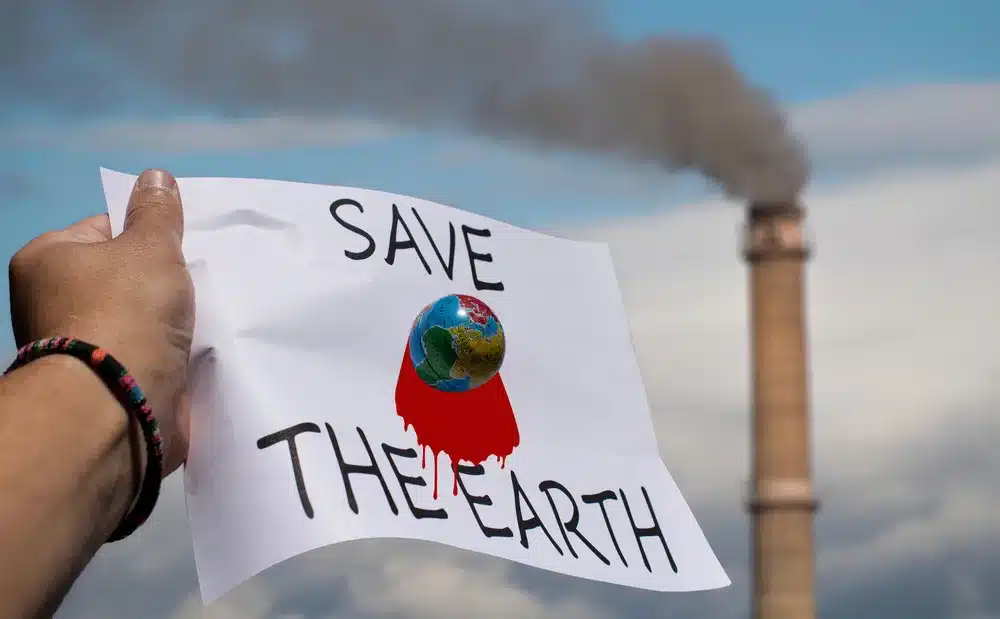
With the country’s green transition underway, climate activism remains alive, judging from recent news reports. Some protests have drawn attention — not for the ideals they champion, but for the apparent lack of understanding behind these outcries.
This article examines activists’ calls through the lens of energy complexity, drawing on real-world lessons from countries that fast-tracked their green transitions and exploring the likely consequences if the Philippines follows the same path.
(Also read: Slow Restorations Endanger Cebu’s Typhoon & Quake Victims)
Activist demands vs. On-the-ground realities
The need to respond to climate change is clear, but navigating that response becomes difficult when visions of a greener future confront the limits of current energy infrastructure.
For Manila Times columnist Ben Kritz, much of climate activism is rooted in a misconception. “…absolutely nobody wants to perpetuate and expand ‘dirty’ energy for its own sake, or thwart action to mitigate emissions and other climate impacts,” he clarified, adding that across government, industry, and the public, most people broadly agree on the need to cut emissions and modernize the energy mix.
”The activist crowd does not recognize this; I said it was a lack of understanding, but really, if we are to make the assumption that they are normal humans capable of rational thought, the lack of understanding is actually a deliberate choice not to understand,” he wrote.
- The case for coal moratorium exemptions
Church and environmental groups called for accountability after typhoons Tino and Uwan ravaged Luzon and Visayas. They accused the government of “climate betrayal” for easing coal plant exemptions despite repeated disasters and criticized the pursuit of coal projects.
Energy Secretary Sharon Garin indicated that the Department of Energy (DOE) could allow exceptions to the 2020 coal moratorium, pointing to proposals for “own-use” power plants designed to serve companies’ internal energy needs. She emphasized that although the ban aimed to reduce reliance on coal and accelerate the shift to renewable energy (RE), coal continues to play a crucial role as a stable, baseload power source.
“We still have a growing economy to support, and our RE power plants are still to be built,” explained DOE Assistant Secretary Rowena Guevara. Solar and wind energy, with capacity factors hovering between 20% and 30%, are unable to provide the consistent, reliable power required to sustain the country’s ambitious short-term growth goal of 6% or more. Additionally, the Philippine peak energy demand is projected to rise roughly 5.3% per year through 2028.
In the UK’s case, the nation entered a coal-free era in September 2024 when its last coal-fired station shut down, completing one of the world’s fastest transitions from coal, which once supplied nearly 40% of the nation’s electricity.
But the effects of that move are now keenly felt. The UK’s rapid shift from coal has driven energy prices sharply higher, with businesses paying at least 50% more than European rivals. Household energy debt hit an eight-year peak in 2025, averaging over £220 per home, while rising green levies and infrastructure costs continue to push bills up. Experts warn that high energy costs could shrink manufacturing output and trigger years of job losses.
To put the Philippines’ emissions in context, China leads globally with 29.2% and Indonesia ranks seventh at 2.3%, while the Philippines contributes just 0.5%. Its share is so small that heavy spending on aggressive mitigation has little impact on the global climate trajectory.
- Does the climate crisis really fuel poverty and death?
In the same protest, an environmental group warned that the fossil fuel industry, aided by government greed, drives the climate crisis, pushing Filipinos into debt, poverty, and loss of livelihoods.
In a surprising twist, Microsoft co-founder and climate advocate Bill Gates argued that the real humanitarian priority is improving lives, not just tracking emissions or temperature targets. He pointed out that while the world’s poorest remain most vulnerable to climate change, “the biggest problems are poverty and disease, just as they always have been.”
Drawing on decades of climate research and billions invested in RE, Gates stressed that with aid shrinking and debt rising in low-income countries, a rigorous, data-driven approach is essential in addressing poverty. “We have to think rigorously and numerically about how to put the time and money we do have to the best use,” he declared.
He’s not alone in his view. The US recently urged the World Bank to refocus its efforts on poverty reduction rather than climate projects. Treasury Secretary Scott Bessent called for scaling back the 45% of funds currently spent on climate initiatives and redirecting them toward expanding affordable energy, alleviating poverty, and boosting economic growth.
At the recently concluded COP30 in Brazil, negotiators set ambitious green targets, agreeing to raise $1.3 trillion annually by 2035 for climate action. The deal also sees public utilities commit $66 billion yearly to renewables and $82 billion to transmission and storage.
But will these measures actually cut emissions? Copenhagen Consensus President Bjorn highlighted that many climate policies are far more costly than effective, noting that fully implementing the Paris Agreement by 2030 could cost up to $1.9 trillion annually while reducing emissions by only about 1% of what’s needed for 1.5°C.
He emphasized that billions in developing countries face more immediate threats, and that directing resources toward health, nutrition, and education could save millions of lives each year while fostering growth and resilience—issues far more pressing than marginal long-term temperature changes.
- Advocating the end of nuclear and fossil fuels, with renewables taking priority
Last month, civil society groups criticized the Asian Development Bank (ADB) for a “dangerous pivot” toward corporate interests and ineffective climate solutions.
The groups criticized the draft policy for keeping fossil gas as a “transition fuel” and warned that lifting the nuclear financing ban is reckless, citing high costs, safety risks, and unproven small modular reactors.
The Netherlands serves as a cautionary tale for this argument, highlighting the continued value of fossil fuels—in this case, gas. Despite rapid strides in renewables, with one of Europe’s highest solar and EV adoption rates, the nation’s electricity grid is straining under surging demand and supply. In 2024, power outages jumped 17% above the five-year average, and more planned cuts loom as infrastructure struggles to keep pace with the green transition.
“The Dutch, despite their vast natural gas reserves, have stubbornly plunged into strict green energy policies — only to find themselves bowing to the folly of renewable energy,” wrote a Daily Tribune editorial, adding that the Dutch grid operator intends to invest $235 billion in upgrading the electricity network, focusing on installing new cables to modernize the system by 2050.
“For a developing nation like the Philippines to be forced to get into the expensive grid adjustment would be nothing less than criminal,” the editorial warned.
As for nuclear energy, it is the RE boom that’s significantly driving its growth. Worldwide, nuclear power is expanding through small modular reactors, supportive policies, and new capacity, now supplying roughly 9% of global electricity as nations seek low-carbon, reliable energy sources.
Underscoring nuclear’s potential in the green transition, France operates 56 reactors, producing 361.7 terawatt-hours (TWh) in 2024—a 13% increase from the previous year. The country leads Europe’s largest economies in electricity exports, supplying about 22% of the EU’s total, thanks largely to its nuclear fleet.
- The myth of cheap renewables
The Power for People Coalition reported that when RE entered Negros’ grid last year, electricity bills initially dropped by P2.40 per kilowatt-hour (kWh).
While renewables are often praised for their low operating costs, scaling them as a primary energy source requires significant investment. The DOE has promoted solar, wind, and offshore wind through its Green Energy Auction (GEA) programs, aiming to expand the country’s renewable capacity.
However, PhilStar columnist Bienvenido Oplas warns that these initiatives will raise consumer costs. Existing feed-in-tariff (FIT-All) projects guarantee fixed rates for 20 years, funded by all on-grid users. As new projects enter via the GEA program, additional allowances will be approved and added to electricity bills, meaning consumers ultimately shoulder the combined costs of both existing and new renewable projects.
With offshore wind among the most expensive renewables, Oplas projected that the GEA-All surcharge per kWh would rise from P1.57 in 2030 to P1.63 by 2032 as capacity expands.
He further explained that lower Wholesale Electricity Spot Market (WESM) prices actually push the GEA-All surcharge higher, as the gap widens between guaranteed renewable rates and market prices. “As more must dispatch intermittent RE generation goes into the grid, it distorts WESM prices, eliminating the much-needed price signals for new capacities for mid-merit and base load. It is a vicious cycle,” he explained. “GEA-All and FIT-All will be adjusted upward to cover the contract for difference with WESM prices.”
Moreover, real-world lessons from the UK and Netherlands show that renewables come with steep costs from grid upgrades, regulations, and levies.
(Also read: Offshore Wind: A Costly Gamble the Philippines Can’t Afford?)
Pragmatism over idealism
The Philippines faces the quintessential energy challenge: the need to balance economic growth, energy security, and climate responsibility. Rapidly phasing out coal, while environmentally appealing, risks severe economic repercussions. The International Labor Organization states that coal-dependent regions could face significant job losses, both directly in mining and power generation and indirectly in local economies. Any hasty closure of coal plants without robust alternatives would jeopardize livelihoods and destabilize communities, undermining broader development goals.
Energy experts stress that the nation’s grid infrastructure is not yet ready for a full-scale renewable transition. As Eduardo Araral, associate professor at the Lee Kuan Yew School of Public Policy, noted, “We should not rush to it [energy transition] and abandon our legacy simply because we want to be green. I think we have to do this in a very, very pragmatic way, and the first and foremost principle really is energy security and affordability.”
He added that a major concern is that the transition to RE could disproportionately affect low-income Filipinos. “Lower-income households in countries with energy poverty can spend between 10-40% of their income on energy, and the cost per kilowatt-hour is significantly higher for them, especially when relying on renewable sources,” he stated.
A pragmatic approach also emphasizes adaptation alongside mitigation. As Lomborg highlights, realistic adaptation measures can drastically reduce projected damages from climate impacts, such as coastal flooding, by up to 88%. By focusing on resilience and strategic investments, the Philippines can protect its most vulnerable populations, ensure energy abundance, and gradually integrate renewables.
Prioritizing a stable, reliable power supply enables continued economic growth, allowing the country to invest wisely in renewable infrastructure without risking systemic energy shortfalls, while also addressing poverty and achieving full electrification for all communities.
Sources:
https://www.manilatimes.net/2025/11/25/opinion/columns/the-coal-fire-of-ph-climate-activism/2230324
https://mb.com.ph/2025/09/15/doe-no-plan-to-close-coal-mines
https://bilyonaryo.com/2025/02/17/does-balancing-act-coals-role-in-the-energy-transition/brand-news/
https://ember-energy.org/latest-insights/the-uks-journey-to-a-coal-power-phase-out
https://theweek.com/tech/why-britains-electricity-bills-are-some-of-the-highest-in-the-world
https://news.stv.tv/politics/energy-debt-hits-eight-year-high-ahead-of-winter
https://www.telegraph.co.uk/business/2025/10/16/green-levies-are-to-blame-for-rising-energy-bills
https://www.gatesnotes.com/home/home-page-topic/reader/three-tough-truths-about-climate
https://www.arabnews.com/node/2620993
https://news.un.org/en/story/2025/11/1166433
https://www.sciencedirect.com/science/article/pii/S0040162520304157
https://www.chinadaily.com.cn/a/202511/11/WS69128168a310fc20369a44e4.html
https://newsinfo.inquirer.net/2144174/adb-under-fire-for-false-solutions-in-energy-policy-review
https://www.bbc.com/news/articles/cn40y9yxkgvo
https://tribune.net.ph/2025/10/20/plunderous-folly
https://www.cre.fr/fileadmin/Documents/Rapports_et_etudes/2025/Rapport_de_surveillance_2024-en.pdf
https://www.philstar.com/business/2025/11/20/2488453/new-es-ai-effect-osw-and-gea
https://www.ilo.org/publications/just-energy-transition-southeast-asia-impact-coal-phase-out-jobs