

Table of Contents
The National Grid Corp. of the Philippines (NGCP) is ramping up a battery energy storage program with a planned additional capacity of 1,850 megawatts (MW) to strengthen the country’s power grid against tight electricity supply conditions and possible generation constraints from the 2027 El Niño.
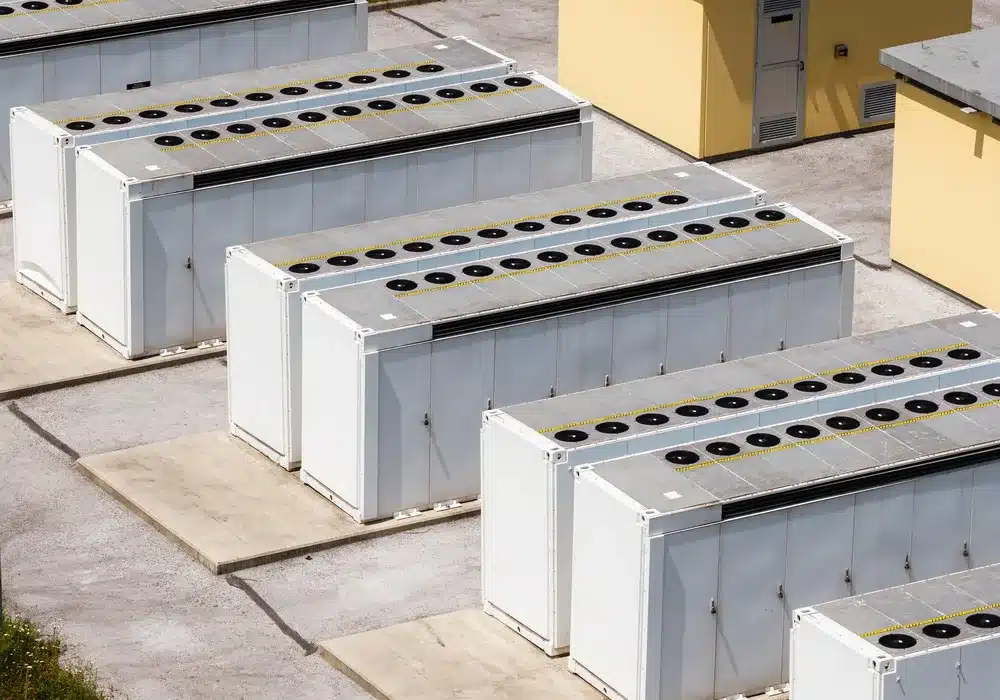
Dubbed Project Airbag, the transmission-side initiative involves deploying battery energy storage systems (BESS) that can store available electricity and release it during periods of high demand, temporary supply shortages, and grid disturbances.
NGCP is assessing 12 additional sites with a combined capacity of 1,000 MW, including Nabas in Aklan, Cadiz in Negros Occidental, and Victoria in Northern Samar. These are on top of 850 MW of battery storage capacity already being developed at six locations.
The ongoing projects are in Laoag, Ilocos Norte; Gamu and Santiago, Isabela; Calatrava, Negros Occidental; Dumanjug, Cebu; and Ubay, Bohol.
NGCP Vice Chairman Henry Sy Jr. presented the program during an Oct. 29 briefing, as the company seeks to improve grid flexibility and prepare for potential supply pressures across the country.
Visayas Supply Concerns
The initiative comes amid continuing tight supply conditions in the Visayas, where simultaneous power plant outages have reduced available generation and prompted the declaration of red and yellow alerts.
The Visayas grid was placed under red and yellow alerts as recently as Oct. 28 because of unavailable generating units. In a Sept. 26 yellow alert, NGCP cited the outages of large coal-fired units TVI 1, PEDC 3, and KSPC 2. PEDC refers to Panay Energy Development Corp., which operates a power plant in Iloilo City.
A yellow alert is declared when the grid’s operating margin is insufficient to cover its contingency requirement. A red alert indicates that available supply cannot meet both consumer demand and the grid’s regulating requirements.
The Department of Energy (DOE) has also directed NGCP to connect more than 250 MW of battery storage projects in Iloilo, Negros, Cebu and Leyte. Energy Secretary Sharon Garin said in August that completing these facilities could reduce yellow and red alerts in the Visayas by at least 50%.
Battery storage is expected to provide faster support during short-duration supply constraints while additional generating facilities and transmission infrastructure are being developed.
However, NGCP stressed that the technology cannot replace the need for more dependable power plants.
“Project Airbag is not being presented as the overall solution to generation adequacy,” NGCP said. “Batteries do not create electricity and cannot substitute for sufficient dependable generation over prolonged periods. They can, however, provide the grid with greater flexibility while the country develops the additional generation capacity it needs.”
Preparing For El Niño
NGCP is also looking at deploying storage facilities across the wider Philippine grid ahead of the possible effects of El Niño extending into 2027.
The main concern is the potential decline in hydroelectric generation as rainfall decreases and water levels in reservoirs fall, particularly in areas that depend heavily on hydropower.
In a Sept. 23 climate advisory, the Philippine Atmospheric, Geophysical and Astronomical Services Administration (PAGASA) said a strong El Niño was active in the tropical Pacific. The agency expected the phenomenon to intensify into a very strong event between September and December 2026 and persist through the first half of 2027.
Battery systems could help manage fluctuations in electricity availability by storing power during periods of higher production, including daytime solar generation, and releasing it during evening demand peaks or when hydropower output declines.
NGCP said early deployment is intended to strengthen the grid before supply conditions deteriorate, rather than wait for shortages to emerge.
Supporting A More Flexible Grid
The company said the benefits of battery storage would extend beyond the current supply situation and the anticipated El Niño episode.
As electricity demand grows and the country’s generation mix becomes more diverse, the transmission system will need additional flexibility to balance supply and demand and accommodate changing generation patterns.
Strategically located BESS facilities can provide rapid response during system disturbances, improve the utilization of existing transmission infrastructure and shift available electricity from periods of surplus production to hours of greater demand.
Project Airbag is also expected to help integrate different energy sources, including large generating facilities, embedded generation, distributed energy resources, net-metered facilities and rooftop solar installations.
NGCP said a more flexible grid could allow households, businesses, distribution utilities, communities and agricultural users to participate more actively in the country’s energy supply system, provided their resources meet technical and commercial requirements.
The initiative is therefore being positioned as part of a longer-term transmission infrastructure and grid resilience strategy, although its implementation remains subject to applicable regulatory processes.
Greater integration of domestic and renewable energy resources could also help reduce the country’s exposure to volatile imported fuel prices while supporting energy security.
NGCP maintained that battery storage would complement the development of additional dependable generation, which remains necessary to meet rising electricity demand and ensure adequate power supply over extended periods.
Source:
https://tribune.net.ph/2026/11/09/ngcp-advances-battery-storage-ahead-of-el-ni%C3%B1o
https://www.dailyguardian.com.ph/blog/panay-eyed-as-ngcp-expands-project-airbag-batteries
https://www.philstar.com/headlines/2026/11/09/2568885/ngcp-unveils-project-airbag-ease-grid-strain