

Table of Contents
The warning signs are once again flashing across the Visayas grid. A recent Institute for Climate and Sustainable Cities (ICSC) report highlighted the possibility that the region may face yellow power alerts—an indication that electricity supply is running dangerously close to demand, leaving little room for unexpected disruptions. For fast-growing economic centers like Cebu, this is not a distant risk but an immediate concern.
According to the ICSC, power supply concerns are not driven by rising summer demand alone. They also stem from persistent issues, including insufficient reserve capacity and unplanned shutdowns of baseload plants, which continue to undermine system reliability.
This vulnerability was already evident earlier in the year. The Visayas grid recorded its first alert, a yellow alert, on January 20, even during the cooler months when electricity demand is typically lower.
Coal’s share in the Philippines’ energy mix rose from about 10% in the 1990s to roughly 60% by 2024, reflecting its role in meeting growing demand. The ICSC’s analysis, however, points to import dependence as a potential exposure to price and supply risks.
Additionally, it argued that continued reliance on imported coal leaves the country exposed to global fuel price volatility. It proposed expanding rooftop solar as an immediate, accessible solution and prioritizing indigenous energy sources to reduce systemic risks and improve affordability.
(Also read: How the PH Is Battling Sky-High Energy Prices)
Can Solar and Wind Meet Visayas Demand?
The rollout of renewable energy (RE) projects in the Visayas has accelerated in recent years, with solar and wind dominating the pipeline. Data shows that the region has around 25 committed power projects totaling about 1,982 MW, with the majority coming from RE sources. Solar accounts for the largest share at 38.37%, followed by wind at 26.01%, alongside battery storage systems at 15.64%.
Electricity demand in the Visayas is projected to grow significantly in 2026, outpacing other major grids. According to the most recent power outlook, peak demand in the Visayas is expected to reach about 3,340 MW in the April to June 2026 period, reflecting continued growth in consumption as the region’s economy expands and hotter months increase usage.
Meanwhile, the NGCP projects demand growth of roughly 24% for the Visayas in 2026, compared with smaller increases in Luzon and Mindanao, underscoring structural tightness in the supply-demand balance.
To help avert grid alerts, the ICSC report recommended minimizing unplanned outages, expanding distributed generation, and ensuring that committed capacities are brought online on schedule.
At first glance, these recommendations appear logical. Yet they also expose a fundamental contradiction in the country’s evolving energy strategy, particularly the growing dependence on solar and wind power.
If preventing unplanned outages is the goal, one must ask: are solar and wind not inherently prone to unpredictable output? And if the system requires “committed capacities,” can intermittent RE realistically fulfil that role?
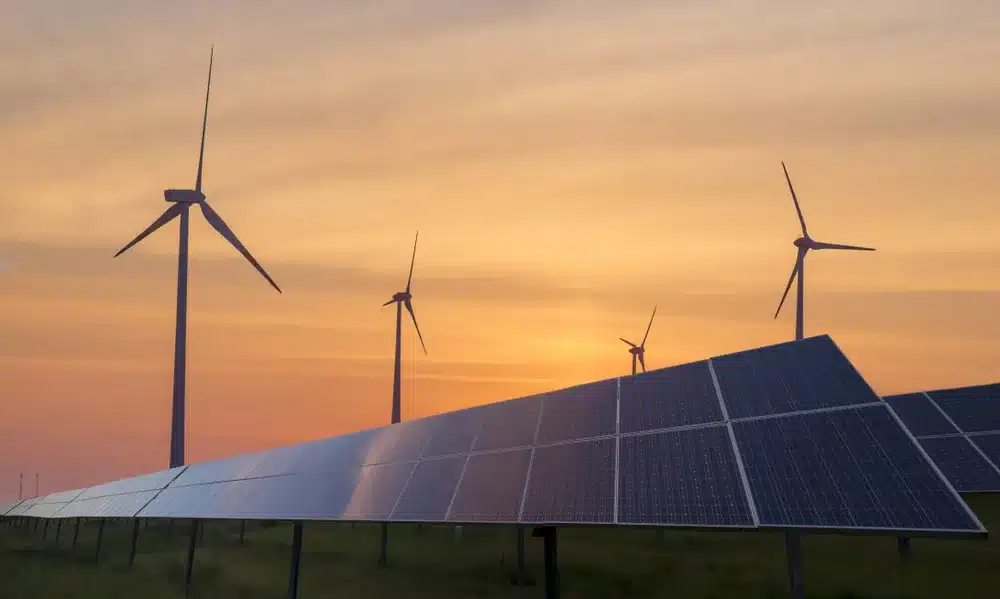
Unlike conventional power plants, solar and wind energy sources are dependent on environmental conditions that cannot be controlled.
Solar panels generate electricity only when sunlight is available. Output drops during cloudy weather and falls to zero at night. Wind turbines, meanwhile, rely on wind speeds within a specific operating range—too little wind produces no power, while excessive wind can force shutdowns for safety.
Meanwhile, “committed capacity” refers to power that can be delivered reliably when needed. Baseload plants such as coal, natural gas, geothermal, and hydroelectric facilities are designed to operate continuously and can be dispatched to meet demand.
Solar and wind do not meet this definition. Their output cannot be guaranteed at specific times. Even with forecasting improvements, grid operators cannot ensure that renewable generation will be available during peak demand periods.
Science and tech journalist Kris De Decker argues that while renewables like wind and solar help lower emissions when they are generating, their variability requires a full backup system to ensure reliability during periods of low output. Because these sources can drop to near zero for extended durations, conventional power capacity must remain available to meet demand at any time. In his view, this effectively results in maintaining two parallel systems, which can raise overall electricity costs and weaken the already modest energy return on investment of renewable technologies.
Also, while renewables are growing rapidly, integration challenges, curtailment, technical compliance, and periods of low output still necessitate backup, storage, or grid support systems to maintain a reliable electricity supply.
In the US, grid operators have documented real reliability challenges as renewable penetration increases. A 2024 analysis noted that the Western Interconnection experienced multiple disturbances in which inverter-based resources, including wind and solar, reduced output or disconnected from the grid during faults, even when the disturbances were short-lived.
These events show that inverter-based technologies behave differently from traditional power plants, which is why grid operators still need a mix of energy sources and stronger grid controls to keep the system stable.
Between January 2022 and May 2025, Chile curtailed about 11,900 gigawatt-hours (GWh) of wind and solar power, with over 6 terawatt-hours (TWh) wasted alone in 2025, because the grid could not absorb all variable generation without storage or flexibility measures. This provides a recent, real-world example of how high shares of variable RE can exceed grid capacity and require curtailment. effectively “wasting” potential clean generation when infrastructure and flexibility are insufficient.
Another argument raised against expanding variable RE such as solar and wind is that their intermittency may require maintaining parallel sources of dependable and flexible power. Because solar and wind output can drop significantly, the system must still rely on dispatchable capacity to meet demand reliably.
(Also read: Cebu Pushes Solar, Braces For Soaring Power Costs)
Cebu’s Growing Need for Baseload Power
The Cebu Electricity Rights Advocates (CERA) has encouraged Cebuanos and micro-entrepreneurs to adopt small-scale solar solutions as electricity demand rises and fuel costs increase amid Middle East tensions. Convenor Nathaniel Chua said solar-powered lighting and fans can help ease peak demand, reduce bill spikes, and lessen strain on the grid, lowering the risk of voltage instability and brownouts.
Nevertheless, Chua added that these measures are only temporary, stressing that CERA will continue pushing for long-term solutions for Cebu.
“Solar is first aid, but Cebu urgently needs the ‘surgery’ of new baseload power plants to ensure long-term reliability and price stability,” he stated. “Baseload power is the backbone of a stable energy system.”
Unlike intermittent alternatives, coal plants provide consistent baseload capacity that anchors grid reliability, especially during periods of tight supply or fluctuating demand. Rather than being the source of instability, the more pressing issue lies in ensuring adequate, well-maintained baseload capacity and timely expansion of dependable generation to meet Cebu’s rapidly growing energy requirements.
Cebu relies on off-island sources for roughly 60% of its electricity, leaving its power supply vulnerable to disruptions beyond its control, such as shortages in other regions or failures in subsea transmission lines. Any major natural disaster or equipment breakdown that interrupts these connections could quickly place the province’s energy security and economic stability at risk.
Unreliable electricity inflicts significant economic losses across the region. Data from the advocacy group ILAW show that major corporations in Cebu can lose about ₱216,000 per day of outages, while small and medium-sized businesses may forfeit around ₱82,000 daily. At the household level, high electricity costs coupled with inconsistent service also reduce disposable income and limit overall spending power.
Business leaders in Cebu’s manufacturing and export sectors have raised concerns over current power conditions, with frequent “yellow alerts” and load-sharing measures driving up operating costs and disrupting production schedules. These recurring issues have added uncertainty to operations, particularly for energy-dependent industries.
CERA has cautioned that without the development of new, stable power plants on the island, Cebu’s economic momentum could face significant headwinds by 2026. The group emphasized that a more resilient and locally grounded energy supply is critical to sustaining growth.
It has also called on the DOE and local utilities to establish a clear and transparent energy roadmap. CERA warned that inaction could push the projected “critical” supply outlook into a more severe reality, potentially exposing Cebu to more frequent and disruptive power outages.
A Defining Moment for Visayas Energy Security
Amid rising global uncertainty driven by the ongoing Middle East conflict, the pressure on energy systems has intensified, exposing vulnerabilities that regions like the Visayas can no longer afford to ignore. Now more than ever, the need for clear, strategic, and forward-looking decisions on energy security has become urgent.
While RE will continue to play an important role, the realities of intermittency and grid limitations underscore a critical truth: a stable, dependable backbone supply remains essential. Baseload power, capable of delivering consistent and dispatchable electricity, is key to sustaining economic growth, protecting industries, and ensuring everyday reliability for households.
For Cebu and the broader Visayas, the path forward is not about choosing one energy source over another, but about building a resilient system anchored in reliability. Without decisive action, supply risks may deepen. With it, the region can secure the stable foundation needed to power its continued progress.
Sources:
https://www.rappler.com/philippines/visayas-may-face-yellow-power-alert-may-climate-report
https://www.pna.gov.ph/articles/1233920
https://icsc.ngo/wp-content/uploads/2026/03/ICSC_Power-Outlook-2026.pdf
https://en.wikipedia.org/wiki/Curtailment_in_Chile
https://cebudailynews.inquirer.net/709222/cera-pushes-solar-solution-as-energy-costs-surge
https://globalnation.inquirer.net/281062/cebus-power-play-securing-energy-for-future-growth
https://www.philstar.com/the-freeman/cebu-news/2026/01/04/2498680/cebu-facing-power-crisis
https://www.energycentral.com/renewables/post/there-realistic-solution-intermittency-2fRZrlnR6FWGfe5